
That one door in your house - you know the one. It was fine all summer, but now that October’s first freezes are settling in around Fort Garland, it suddenly sticks. You have to give it a little extra push to get it to latch. It’s easy to dismiss it as a simple quirk of an older home, but in my 12 years of working on properties, I’ve learned that houses talk to us. And sometimes, a sticking door is its way of telling you something more serious is going on beneath the surface.
Here in our mountain setting, the dramatic temperature swings and the powerful freeze-thaw cycles put unique stress on our homes. As the ground freezes and thaws, it can shift the very foundation your house rests on. That little annoyance could be one of the first structural inspection signs you see. Before the first snows set in for good, it’s a wise time to walk around your property and look for these subtle, and not-so-subtle, clues.
Common Signs and Symptoms
When my team and I evaluate a home, we’re looking for patterns. One isolated symptom might not be a big deal, but when you see several of these signs together, it often points to underlying structural movement. Here are some of the most common red flags I see in the field.
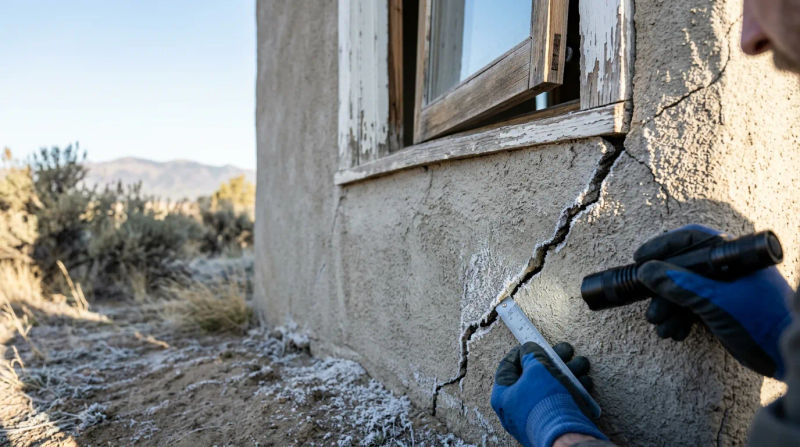
- Cracks in Drywall or Plaster: Not all cracks are created equal. Small, straight hairline cracks above a door frame can be from normal settling. But if you see jagged cracks running diagonally from the corners of windows or doors, or long horizontal cracks, that’s a major indicator of stress. Stair-step cracks in brick or concrete block walls are also a classic symptom.
- Sticking Doors and Windows: That door I mentioned earlier? When a foundation shifts, it twists the entire frame of the house. Door and window frames, which need to be perfectly square to function, are often the first victims. If you suddenly have multiple doors or windows that are difficult to open or close, your home’s frame is likely out of alignment.
- Uneven or Sloping Floors: Does a ball roll to one side of the room on its own? Do you notice a sag or a dip when you walk across the floor? This can indicate that the supports underneath - the piers, joists, or foundation itself - are sinking or shifting.
- Foundation Cracks: It’s worth taking a walk around your home’s exterior to inspect the visible foundation. While tiny vertical cracks are often just from concrete curing, horizontal cracks are a serious warning sign. They suggest that pressure from the soil outside is pushing the wall inward. A home inspection for cracks Fort Garland homeowners should prioritize involves looking for cracks wider than a quarter of an inch.
- Gaps Around Exterior Window Frames or Doors: Look for gaps between your window or door frames and the exterior siding. This indicates that the frame is pulling away from the wall, a clear sign of structural movement.
- Bowed or Leaning Walls: This is one of the most serious signs. Use a level to check your basement or foundation walls. If you see any noticeable bowing inward or leaning, it means the wall is under immense pressure and could be at risk of failure.
- Sagging Roofline: Stand back from your house and look at the roofline. It should be straight. A dip or sag in the middle could point to issues with the roof framing, but it can also be caused by foundation settling that has transferred all the way up the structure.
- Nails Popping from Drywall: Sometimes called “nail pops,” these are small, circular cracks where the drywall nails or screws are being pushed out. It happens when the wooden frame of the house shifts, leaving the fastener behind.
What Causes This Problem
Understanding the cause is key to finding the right solution. In the Fort Garland area, the issues are almost always tied to our unique environment and the way our homes were built.
Many homes in this area were built in the 1980s. These are often practical, modest ranch or two-story structures built on individual rural lots. While generally well-built, their foundations are constantly battling the forces of nature. The primary culprit is water and its interaction with the soil around your foundation. When the soil gets saturated from melting snow or rain and then freezes, it expands with incredible force, pushing against your foundation. When it thaws, the soil contracts, and the foundation can settle back down, but not always evenly. This constant cycle is one of the most common signs of foundation settling Fort Garland properties experience.
Poor drainage makes this problem exponentially worse. If your gutters are clogged or the ground around your home doesn’t slope away properly, you’re essentially channeling water directly to the base of your foundation. This over-saturates the soil in one area, leading to uneven movement and significant stress on your home's structure.
When to Call a Professional
So, you’ve noticed a few of these signs. What’s next? Some minor issues, like a single hairline crack in the drywall, can often be patched and monitored. But if you’re seeing multiple symptoms, or any of the more serious ones like horizontal foundation cracks or bowing walls, it’s time to stop guessing and get an expert opinion.
Ignoring these problems won't make them go away; they will only get worse and more expensive to fix. A small foundation repair now is far better than a major structural rebuild later.
A qualified professional can perform a Fort Garland structural inspection to assess the situation thoroughly. They won’t just look at one crack; they’ll analyze the entire system of your home to understand the root cause. They can determine the difference between normal, harmless settling and active, damaging movement. This comprehensive view is critical for developing a real, long-term solution, not just a cosmetic patch.
Conclusion
Your home is your biggest investment, and its structural integrity is its most important feature. As we head into the colder months, pay attention to the new creaks, sticking doors, and small cracks that appear. These are often the earliest structural inspection signs telling you it’s time for a check-up. Being proactive is the best way to protect your property and your peace of mind. Catching these issues early can save you thousands of dollars and a lot of headaches down the road.
If you notice any of these signs, contact a local home inspector for an inspection.