
The first dusting of snow on the ground here in Sanford is always a beautiful sight, but for me, it’s also a reminder. Those crisp, clear nights in our high-desert valley mean temperatures are dropping fast, and any weak spots in a home’s plumbing are about to be put to the test. I’ve spent over a decade in this field, and I can tell you that October is the perfect time to find and fix potential freeze risks before a real hard freeze sets in and turns a small issue into a catastrophic flood.
Many of the homes in our area, especially the charming pre-1940s farmhouses and bungalows, were built in an era before modern insulation standards. They have a ton of character, but they also have quirks that can leave pipes vulnerable. Taking a walk around your property with a critical eye can reveal a lot. Here’s what my team and I look for when we’re assessing a home for winter readiness.
Common Signs and Symptoms
When I perform an inspection, I’m looking for subtle clues that point to bigger problems. These are the most common freeze risk signs I find, especially in older properties. Think of this as a basic home inspection freeze checklist for older homes you can use yourself.
- Exposed Pipes in Unheated Spaces: The most obvious risk. Go into your crawl space, basement, or attic. Do you see bare copper or PEX lines running along the sill plate or floor joists? If these spaces are unheated and uninsulated, the pipes are sitting ducks.
- Plumbing on Exterior Walls: Kitchen sinks are often placed under a window on an exterior wall. In older homes, the insulation in these wall cavities can be minimal, settled, or nonexistent. A bitterly cold wind hitting that wall all night can be enough to freeze the pipes right inside it.
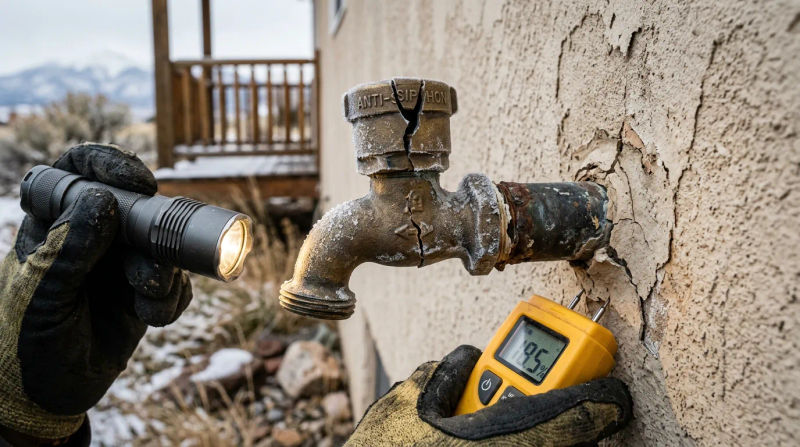
- Unprotected Outdoor Faucets (Hose Bibs): Look at your exterior spigots. Are they bare metal? Do you see a shut-off valve for them inside the house? Many older homes have standard spigots that leave water trapped right at the exterior wall, a prime spot for freezing and splitting.
- Visible Drafts Near Plumbing: Feel for cold air coming from around pipes where they enter the home from a crawlspace or basement. Check under sinks and behind toilets. These small air gaps allow frigid air to blow directly onto your pipes.
- Cantilevered Floors: This is a floor that juts out from the main foundation, like a bay window or a small room addition. Plumbing for heating elements or fixtures is sometimes run through these uninsulated, exposed floor cavities. They are notoriously cold and a major freeze hazard.
- Water Lines in the Garage: Do you have a utility sink, washing machine, or water heater in an unheated or poorly insulated garage? Garage doors offer very little protection from the cold, making any plumbing in that space extremely vulnerable.
- Cracks in the Foundation: Small cracks or gaps in the foundation wall, especially near where utility lines enter, can let in a surprising amount of cold air. I always pay close attention to the foundation around the water main’s entry point.
- Slow-Flowing Faucets on Cold Days: This is a symptom, not just a sign. If you turn on a faucet on a very cold morning and the water pressure is low, it could be an early indicator that a freeze-up is already starting to happen in the line. This is one of the most urgent freeze risk signs Sanford homeowners should watch for.
What Causes This Problem
Understanding why pipes freeze helps you understand the solution. It’s not just about the ambient temperature in a room; it’s about heat loss. Water in a pipe loses heat to the surrounding cold air. If it loses heat faster than it can be replaced by warmer water from inside the house, it will eventually freeze.
Several factors accelerate this heat loss:
- Lack of Insulation: This is the big one. Insulation doesn’t create heat; it just slows down heat transfer. In the pre-1940s vernacular farmhouses common around Sanford, wall insulation was often an afterthought, and crawlspaces were vented to the outside. This is a key part of how to spot freeze-prone pipes in an inspection - we look for where the home’s thermal boundary is incomplete.
- Air Infiltration (Drafts): A constant flow of cold air, even a small one, is incredibly effective at stripping heat away from a pipe. This is known as convective heat loss. A tiny crack in the foundation can be more dangerous than a generally cold room because it creates a targeted stream of frigid air.
- Conduction: Pipes that are in direct contact with a cold surface, like a concrete foundation wall or an uninsulated rim joist, will lose heat directly to that surface. This is why even insulated pipes can be at risk if they are improperly installed against a frozen mass of concrete.
- Location: The simple placement of a pipe dictates its exposure. A pipe in an uninsulated north-facing wall will be at greater risk than one on a south-facing, sun-warmed wall. A pipe in a drafty crawlspace is far more vulnerable than one in a finished, heated basement.
When to Call a Professional
Some winterizing tasks are perfect for a DIY weekend. You can easily add foam insulation sleeves to accessible pipes in a basement or install an insulated cover over your outdoor hose bibs. These are inexpensive, effective first steps.
However, you should call for professional help when you encounter more systemic issues. If you’re seeing multiple freeze risk signs from the list above, it’s a good indication that you need a more comprehensive solution.
Consider calling an experienced professional if:
- You suspect poor or missing insulation inside your walls. This requires specialized tools like an infrared camera to diagnose without tearing things apart.
- Pipes are located in a cramped, inaccessible crawlspace that needs to be properly air-sealed and insulated. This can be difficult and dirty work that requires knowledge of vapor barriers and ventilation.
- You need to have older, standard hose bibs replaced with modern frost-free models.
- You have foundation cracks that need to be sealed or require significant insulation work around the rim joists of your home.
- You want a complete, top-to-bottom assessment. A qualified home inspector can provide a detailed report that acts as a roadmap, prioritizing the most critical fixes and offering solutions you may not have considered.
My team and I have seen situations where a homeowner spent a weekend insulating pipes, only to have a different, less obvious pipe freeze and burst because the root cause - major air leaks in the foundation - was never addressed.
Conclusion
With Sanford’s cold nights already here, now is the time to be proactive. A burst pipe isn’t just an inconvenience; it can cause thousands of dollars in water damage, lead to mold growth, and create a massive headache. By taking a few minutes to walk through your home and look for these common trouble spots, you can get ahead of the problem.
Pay special attention to unheated areas, exterior walls, and any place where you can feel a draft. Simple fixes can handle isolated issues, but if your older home has several risk factors, a professional assessment is a wise investment. Don't wait for the deep freeze of winter to reveal your home's weaknesses.
If you notice any of these signs, contact a local home inspector for an inspection.